SarunasVerner
Theoretical physicist, KICP Fellow at the University of Chicago
I am a theoretical cosmologist and particle physicist. My research focuses on inflation and reheating. In particular, I study how dark matter, axions, and other new particles were produced in the early universe, including in phase transitions and black hole evaporation. I test these models with measurements of the cosmic microwave background and gravitational waves, as well as other astrophysical data. I also use machine learning to study the structure of physical theories.
The inflaton rolls down a Starobinsky-type plateau. Each e-fold stretches space by a factor of e, and 60 of them by e60, about 1026. Behind it is the frozen imprint of quantum fluctuations, computed from the exact de Sitter mode functions.
More on reheating and my work on itResearch areas
I study models of physics beyond the Standard Model and their consequences in the early universe, with the goal of finding observations that can test them.
-
Cosmology
Inflation, reheating & dark matter
Gravitational particle production, non-equilibrium dynamics, axions, and the origin of dark matter.
Explore this research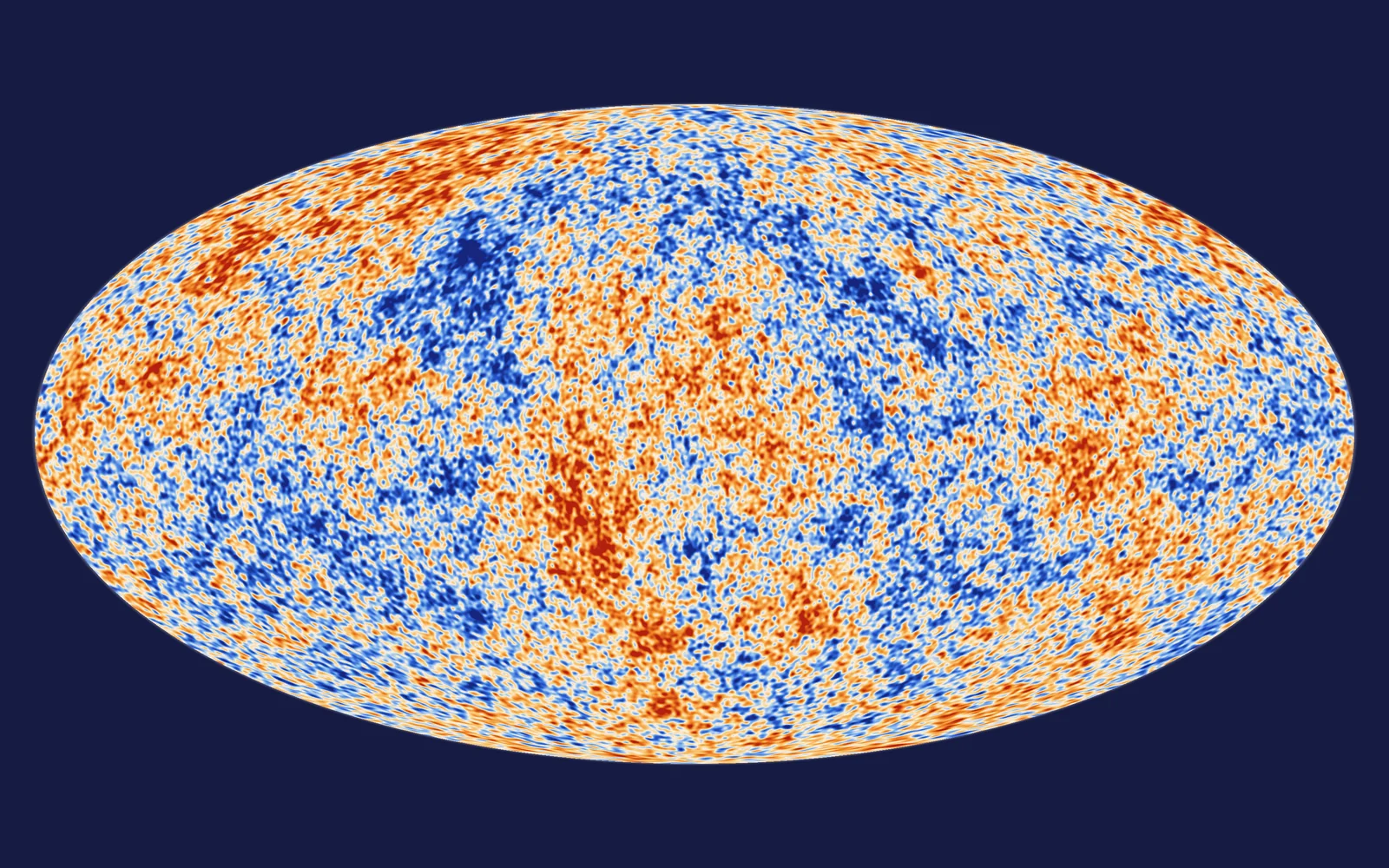
-
Particle physics
Particle physics & field theory
Physics beyond the Standard Model: models of dark matter, flavor physics, supersymmetry, supergravity, and electroweak sphalerons.
Explore this research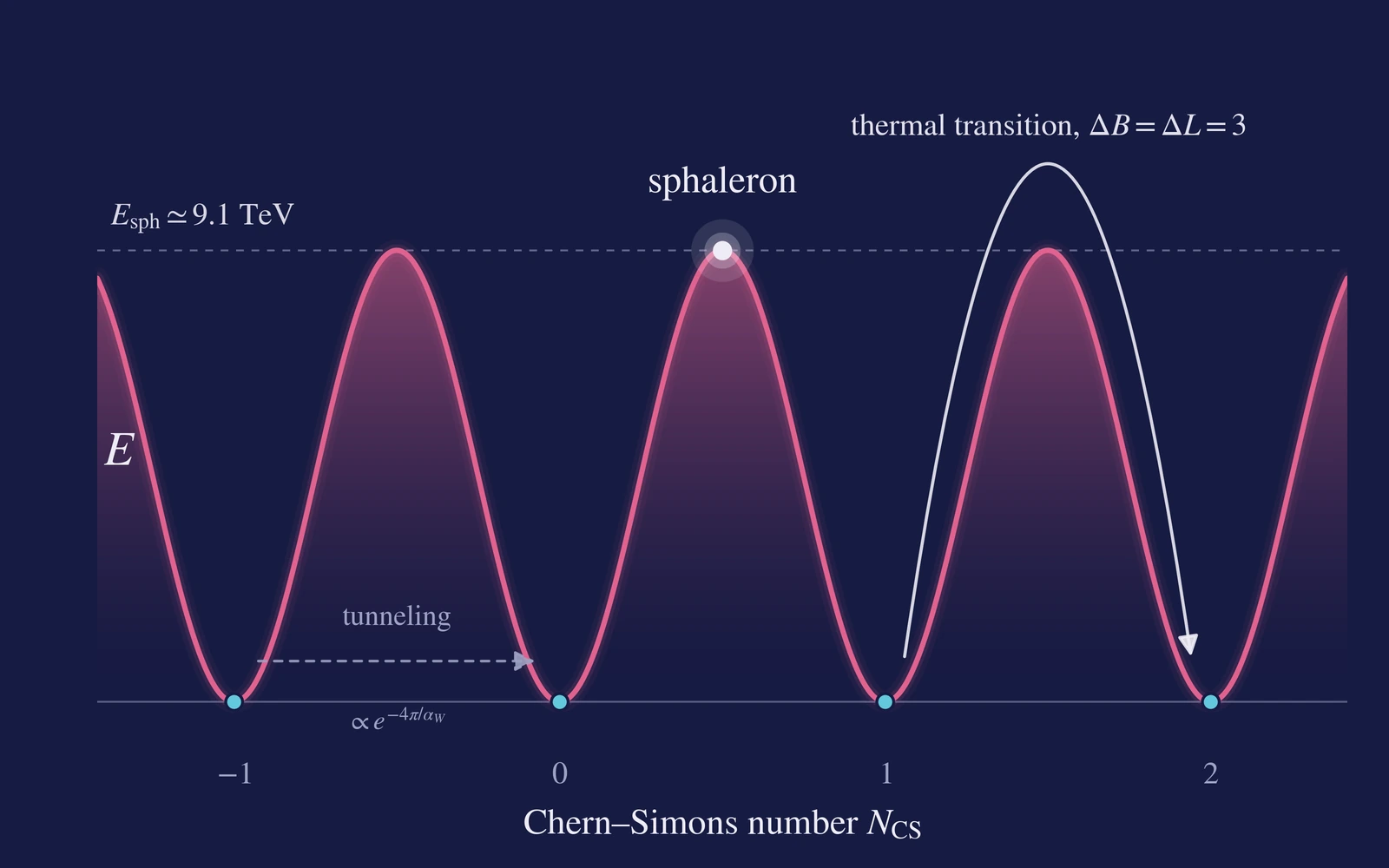
-
Observables
Gravitational waves & new probes
Gravitational wave signals of spectator fields and cosmic strings, and astrometric searches for ultralight dark matter.
Explore this research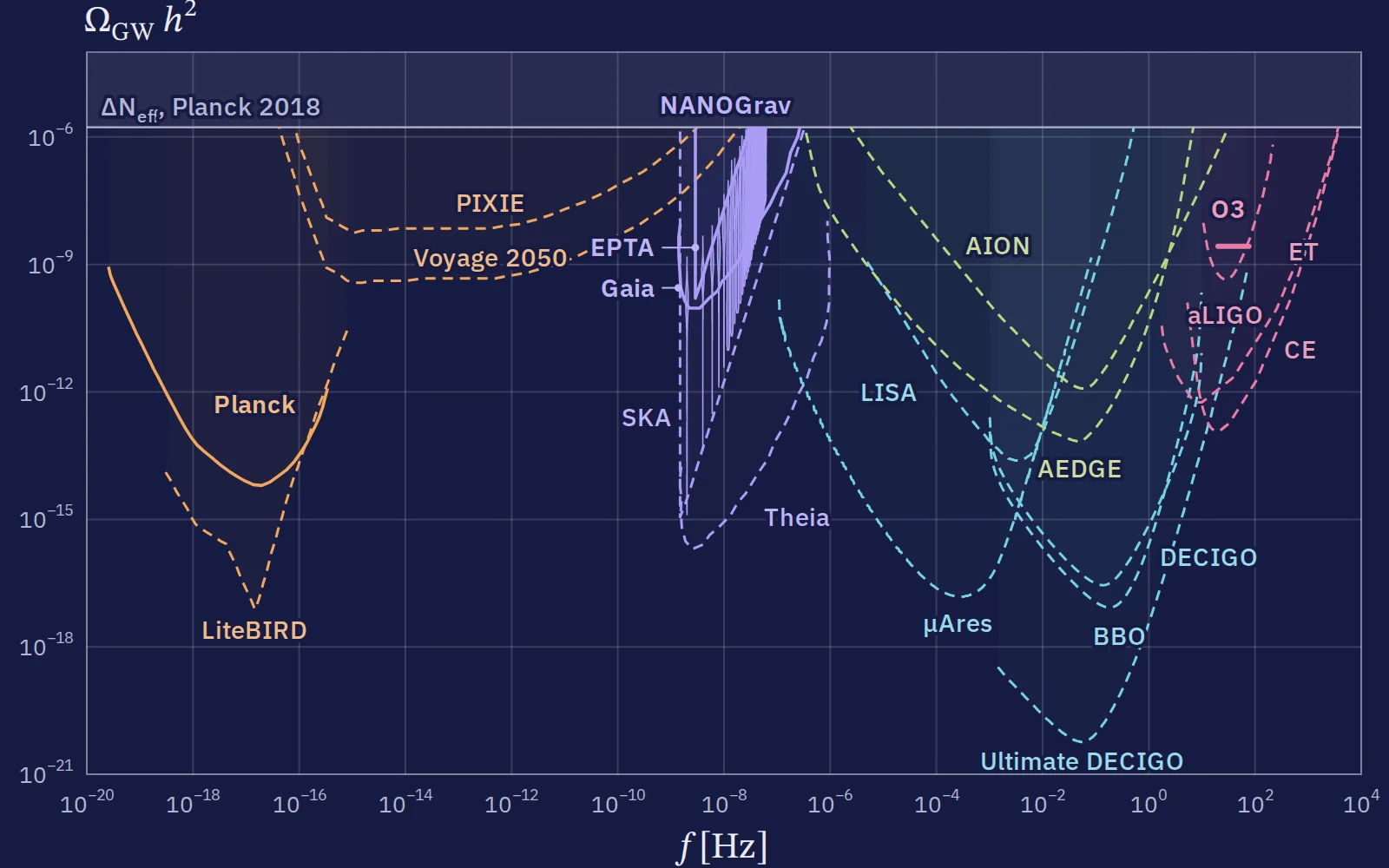
-
Methods
Machine learning for theoretical physics
Machine learning methods for discovering symmetries, Lie algebras, and the structure of flavor models.
Explore this research
Selected work
The full record has 49 papers.
-
Early universe
Gravitational portals in the early Universe
Physical Review D 105, 075005 (2022), arXiv:2112.15214
We show that graviton exchange alone produces dark matter and radiation during reheating, and derive a lower bound of about 1012 GeV on the maximum temperature.
-
Early universe
Axion kinetic misalignment and parametric resonance from inflation
JCAP 08, 036 (2020), arXiv:2004.00629
We show that kinetic misalignment and parametric resonance allow axion dark matter with decay constants well below 1011 GeV when inflation sets a large initial value of the Peccei–Quinn field.
-
Particle physics
The electroweak sphaleron revisited, I and II
Physical Review D 112, 113009 and 113010 (2025), arXiv:2505.05607 and 2505.05608
We revisit the static electroweak sphaleron and its unstable mode, and then study its nonlinear decay using a public numerical code.
-
Gravitational waves & probes
New method for the astrometric direct detection of ultralight dark matter
Physical Review Letters 134, 111003 (2025), arXiv:2406.03526
We propose to search for ultralight dark matter using the apparent positions of distant sources, such as quasars.
-
Machine learning
Deep learning symmetries and their Lie groups, algebras, and subalgebras from first principles
Machine Learning: Science and Technology 4, 025027 (2023), arXiv:2301.05638
We develop a deep learning method that discovers continuous symmetries and their Lie algebra structure directly from labeled data.
Calendar
Upcoming
-
Thermal Damping of a Spectator Scalar
Paris-Saclay Astroparticle Symposium
Workshop talk
-
Reheating after Inflation
National Autonomous University of Mexico (UNAM)
Colloquium
-
Reheating after Inflation
University of Chicago
KICP Chalk Talk
-
Multimessenger Probes of New Scales in Physics
Aspen Center for Physics
Workshop presentation
-
University of Minnesota
FTPI Seminar
-
University of Alabama
HEP Seminar
Let’s talk physics
I welcome conversations about early universe cosmology, particle physics, observational probes, and machine learning.